


How to Handle Scratches and Scuffs in a Rental Before Moving Out

Extended Openroom Network
Learn how to repair scratches and scuffs in a rental before moving out, protect your security deposit, and leave the property in good condition.
Read More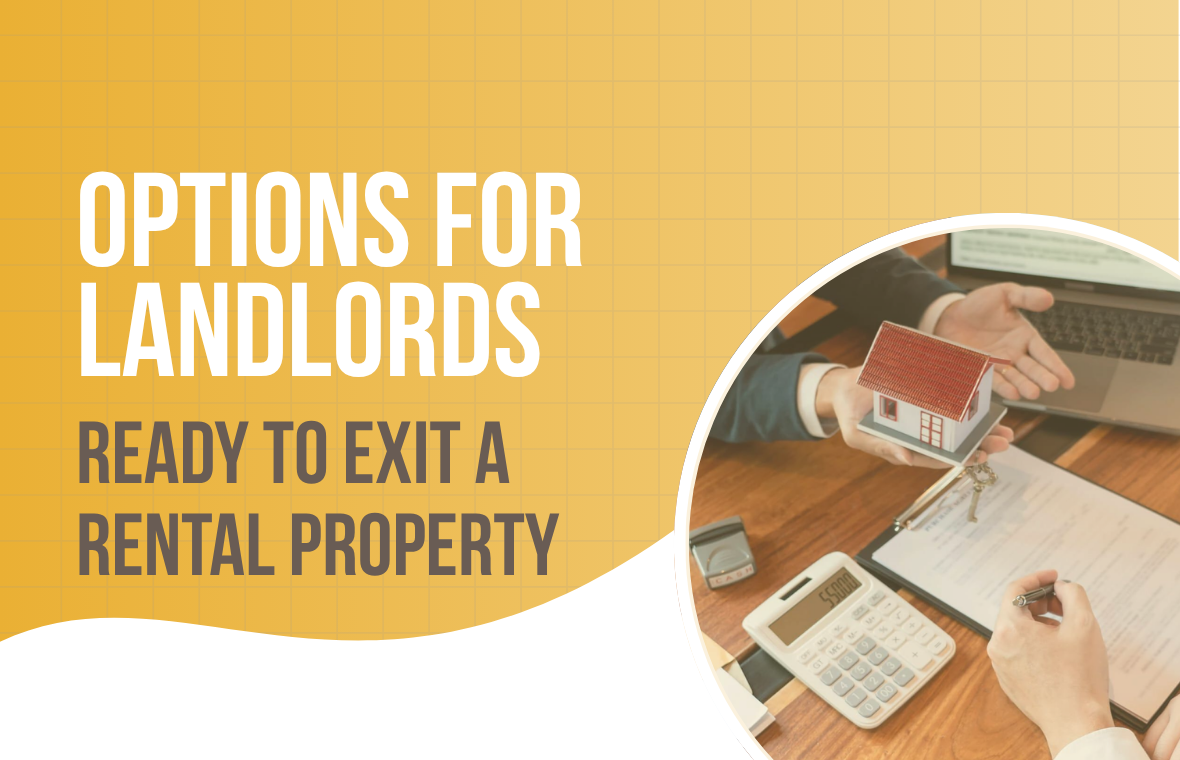
Owning a rental property can stop making sense for many reasons. Maintenance costs may be increasing, financing may have become expensive, the landlord may want to retire, or the property may simply require more attention than the return justifies.
For Ontario landlords, exiting is not as simple as deciding to sell and asking the tenant to leave. The best approach depends on the tenancy, property condition, buyer type, timing, taxes, and whether vacant possession is actually available.
One of the simplest options is selling the rental as an occupied investment property.
The existing tenancy continues, and the buyer effectively steps into the landlord role after closing.
This route can work well when the tenant pays reliably, the property produces reasonable income, and the likely buyer is another investor.
Prepare accurate records before listing.
These should include the lease, renthistory, deposits where applicable, maintenance records, utility arrangements,and documentation of any lawful rent increases.
Good records make it easier for a buyerto evaluate the property's actual income rather than relying on estimates.
A landlord may not want to spend months repairing, staging, showing, and marketing a property before exiting.
That becomes particularly relevant when the rental needs substantial work or the owner lives far away.
Landlords can compare a traditional listing with an offer from a direct buyer such as We Buy Ontario Houses, which states that it purchases Ontario properties directly and in as-is condition.
Compare the expected net outcome rather than the highest theoretical sale price.
A traditional sale may provide broader market exposure, while a direct sale may reduce preparation costs, showings, financing uncertainty, and time before closing.
Selling a residential rental propertydoes not by itself mean the tenant has to leave.
This is an important distinction for landlords planning a sale around vacant possession.
Ontario's Landlord and Tenant Board has specific procedures when a landlord or purchaser requires a rental unit for residential occupation. A purchaser-own-use situation can potentially involve an N12 notice after there is an agreement of purchase and sale and the statutory requirements are met.
A notice also does not automatically create an eviction. If the tenant does not leave, the landlord generally needs an order from the Landlord and Tenant Board before an eviction can occur.
Because notice periods, compensation rules, qualifying occupants, and documentation requirements matter, review the current Landlord and Tenant Board N12 instructions before making commitments about possession dates.
Another possibility is a voluntaryagreement with the tenant.
This can be useful when both parties already have reasons to end the tenancy and can agree on a realistic move-outdate.
Do not treat this as an informal conversation.
Use the correct documentation and make sure the tenant is agreeing voluntarily.
A negotiated arrangement may involve timing flexibility or other terms, but landlords should understand their legal obligations before proposing anything.
Avoid promising a buyer vacant possession until the necessary agreement or legal process is actually in place.
Landlords often assume they need to renovate before selling.
That is not always true.
Start by separating repairs into three groups:
An active plumbing leak deserves different treatment from dated cabinets.
Get estimates for major projects and compare the expected increase in sale value with the cost of completing the work.
If a $35,000 renovation only appears likely to increase the property's net sale proceeds by $20,000, completing it purely for resale may not be worthwhile.
Every additional month of ownership has acost.
Even when the property is tenanted, rent may not cover every expense.
Calculate the monthly holding cost before deciding to delay a sale for renovations or a potentially stronger market.
A higher sale price several months later is not necessarily a better result if carrying costs absorb the difference.
Before selling, determine whether the problem is the property itself or the way it is financed.
Calculate annual rental income and subtract operating expenses.
Then examine mortgage payments, interest expense, upcoming capital repairs, and expected major replacements.
A property may still have positive gross rent while producing weak cash flow after financing and maintenance.
Also calculate the capital tied up in the property.
If substantial equity is producing a relatively small annual return, the landlord may decide that selling and reallocating the capital fits their financial goals better.
Investors will usually want more than photographs.
Prepare financial and operating documentation before marketing the property.
Keep rent records, lease documents, property tax information, insurance details, maintenance history, utility costs, and major repair invoices organized.
If the property contains multiple units, keep information separated by unit where possible.
Transparent records help serious buyersassess income, operating expenses, and future capital requirements moreefficiently.
Selling a rental property can create tax consequences that differ from selling a principal residence.
Potential issues can include capital gains and the treatment of depreciation or capital cost allowance where applicable.
The exact result depends on the property's history, ownership structure, purchase price, improvements, and previous tax treatment.
Gather purchase documents, legal fees, major improvement records, and prior tax information before meeting with an accountant.
Do this before accepting a deal if tax consequences could materially affect the amount you actually keep afterclosing.
Landlords usually have several possible routes rather than one correct answer.
You might sell the property with the tenant in place to another investor, pursue a traditional market sale, compare an as-is direct sale, or wait while completing selected repairs.
Evaluate each scenario using the same numbers.
Estimate sale proceeds, transaction costs, repairs, carrying costs, taxes, and the likely time to closing.
Then consider transaction risk.
A slightly lower offer with fewer conditions and a predictable closing date can have different value from a higher offer that depends on financing, vacant possession, or extensive repairs.
Leaving the rental market should be approached as a financial and operational decision, not simply a listing decision.
Start by reviewing the tenancy and current Ontario rules. Then assess the property's condition, financial performance, carrying costs, tax implications, and likely buyer types.
Most importantly, do not assume that selling automatically ends an existing tenancy or that renovating automatically produces a better return.
The strongest exit plan is the one that gives the landlord a realistic path to closing while respecting the tenancy, controlling additional costs, and maximizing the amount that remains after the transaction is complete.



This article was contributed by a member of the Openroom Partners network, a community of landlords, property managers, legal professionals, industry advocates, and housing experts who share Openroom’s commitment to a fairer, more transparent rental market. Guest contributors bring hands-on experience from across the rental housing ecosystem, offering practical insights, expert analysis, and opinion pieces on the issues that matter most to housing providers, from tenant screening and rent collection to legislation, market trends, and best practices in property management.
Openroom is a licensed Ontario Consumer Reporting Agency dedicated to rental housing data transparency. Through our guest contributor program, we amplify diverse voices and real-world expertise to help landlords and property managers make better-informed decisions. The views expressed in guest posts are those of the individual contributor and do not necessarily reflect the views of Openroom.
To contribute your own article to Openroom, please send in your draft to hello@openroom.ca.

.png)
.png)
.jpg)









.png)
%20(1).png)





.png)


.png)
.png)













.png)


.png)
.png)

.png)


.png)


